
R·E·M Blog

R·E·M Blog

Did you know that an accidental chemical release from a facility is not only hazardous to workers but also to Read more
What is a Safety Maturity Assessment? A Safety Maturity Assessment is a structured evaluation designed to measure the effectiveness of Read more
As Texas continues to lead the nation in industrial growth and energy production, ensuring the safety of our storage facilities Read more
Combustible dust is utilized in a wide variety of facilities in different capacities, such as in food processing, plastics handling/production, Read more
Did you know that one spark can turn an entire facility into a dangerous fire hazard? Combustible dust is a Read more
NFPA 30 Flammable Liquids
In most jurisdictions, facilities that store or use flammable or combustible liquids are required to adhere to the requirements outlined Read more

Welcome to the R.E.M. Blog! This is an space for us to provide commentary on current issues facing our industry Read more

Residential Neighborhood Built Close to Oil Refinery in Port Arthur, TX - Aerial

Did you know that an accidental chemical release from a facility is not only hazardous to workers but also to those in surrounding communities? As a result of the hazards present, the Environmental Protection Agency (EPA) requires chemical facilities regulated under the Risk Management Program (RMP) rule to conduct an offsite consequence analysis (OCA) for each covered process at least once every five years.[1] The analysis is intended to determine the potential impacts of accidental chemical releases on communities surrounding the facility.

Two types of releases are assessed in the OCA, the (1) Worst-case release scenario, and the (2) Alternative release scenario.

The worst-case scenario is defined using conservative assumptions, including a 10-minute release of the entire contents of the largest vessel under stable atmospheric conditions.[2] As such, the worst-case scenario often estimates an overly conservative impact to areas surrounding an RMP regulated facility.

The alternative release scenario is intended to represent a more likely release scenario. Two criteria needed for the alternative release scenario are, (1) it is more likely to occur than the worst-case scenario, and (2) will reach an endpoint offsite. In addition, the weather data for the alternative scenario is based on average weather conditions for the facility, rather than the stable atmospheric conditions that the worst-case scenario is based on.[3]

When conducting the OCA, accurate source-term characterization is necessary to obtain realistic results. The source-term characterization involves quantifying the maximum inventory of each regulated substance, container conditions, and physical properties such as vapor pressure, molecular weight, and boiling point. The endpoint concentrations to be modeled for toxic substances are defined in Appendix A,[4] which corresponds to a material’s published Emergency Response Planning Guideline Level 2 (ERPG-2) value. The endpoint concentrations to be modeled for flammables are 1 psi overpressure for vapor cloud explosions and 5 kW/m² thermal radiation for pool fires.[5]

The OCA can be performed using “any commercially or publicly available air dispersion modeling techniques, provided the techniques account for the specified modeling conditions and are recognized by industry as applicable as part of current practices.” [6] As such, the software chosen for the modeling is selected based on scenario-specific considerations, such as the type of substance being modeled (dense or neutrally buoyant gas) and potential distance limitations of the software.

The modeling identifies the endpoint distances, then locations of population receptors (e.g., schools, hospitals, prisons) [7] and environmental receptors (e.g., national parks, wildlife sanctuaries, wilderness areas) [8] within the endpoint distances must be identified. Additionally, the population within a circle, with its center at the point of the release and a radius determined by the distance to the endpoint, must be determined. An example diagram illustrating the distances for toxic endpoints with receptor locations is shown in Figure 1.

Figure 1: Example OCA Toxic Endpoint Distances

Ultimately, the OCA serves as a tool to identify potential hazards from chemical releases to communities surrounding the RMP-regulated facility. The worst-case scenarios of the OCA are conservative and intended to ensure planning consistency of all RMP regulated processes within the facility. The alternative release scenarios are developed using facility-specific meteorological data, credible release scenarios, and credited safeguards. As such, alternative release scenarios are intended to more effectively identify process-specific hazards. By analyzing both types of scenarios for each covered process, appropriate engineering and administrative controls can be implemented to minimize potential hazards to communities from accidental chemical releases.

Contact R.E.M. Risk Consultants today to learn more about our services and how our experts can assist your facility in complying with EPA RMP requirements. For more information, visit our website at www.remrisk.com. Together, we can ensure a safer future for our communities.


[1] 40 CFR § 68.36 Review and update.

[2] 40 CFR § 68.25 Worst-case release scenario analysis.

[3] 40 CFR § 68.28 Alternative release scenario analysis.

[4] 40 CFR § 68 Appendix A-Table of toxic endpoints.

[5] 40 CFR § 68.22 Offsite consequence analysis parameters.

[6] 40 CFR § 68.25(g) and 40 CFR § 68.28(c) Parameters to be applied.

[7] 40 CFR § 68.30(a) Defining offsite impacts-population.

[8] 40 CFR § 68.33(a) Defining offsite impacts-environment.

Blog 9.18 graphic 1

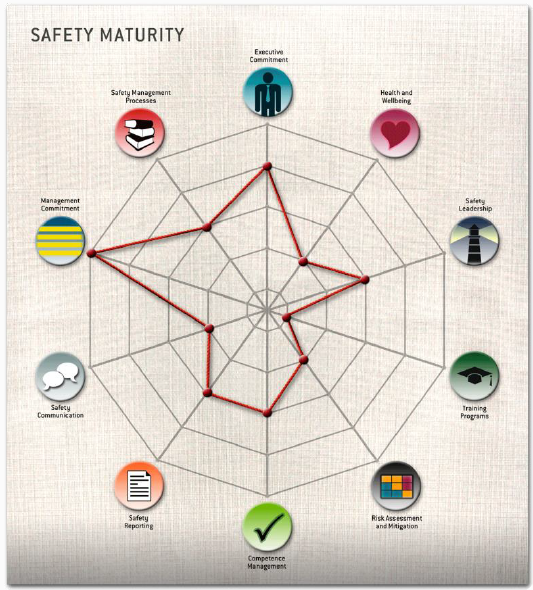
What is a Safety Maturity Assessment?

A Safety Maturity Assessment is a structured evaluation designed to measure the effectiveness of an organization’s safety culture, processes, and systems. This assessment identifies the current baseline of an organization—which includes its strengths, weaknesses, and opportunities for improvement.

However, it is crucial to understand that an assessment alone will not drive change. True transformation requires active leadership involvement and a motivated workforce. Without these elements, the results will remain data on paper rather than catalysts of real improvement.

How to Evaluate Your Facility

Several well-established frameworks exist to help organizations assess their safety maturity. While the terminology may differ, most models outline five progressive stages of safety culture development—from reactive to proactive to fully generative.

These models typically measure:

  • Organizational mindset toward safety
  • Leadership commitment and accountability
  • Trust and communication between leaders and employees

By examining behaviors, processes, and employee engagement at each stage, companies can spot gaps, apply targeted strategies, and steadily progress toward a mature safety culture— perhaps one where safety is not just a priority, but a core organizational value woven into daily operations.

Why Leadership Matters

One common misconception is that poor safety culture stems mainly from the workforce. In reality, frontline culture is often a reflection of leadership behaviors and priorities.

Research from Sentis shows that only 1 in 4 leaders consistently demonstrate strong safety leadership behaviors[1]. This makes leadership commitment absolutely critical. When leaders set and reinforce a compelling vision for safety, they establish the “tone at the top,” influencing every level of the organization.

The Results of a Strong Safety Culture

The benefits of a mature safety culture extend far beyond fewer accidents and injuries:

  • Reduced costs: Lower workers’ compensation claims, insurance premiums, and indirect costs.
  • Higher morale: Employees feel valued, motivated, and more engaged in their work.
  • Improved retention: A positive culture reduces turnover, a welcome relief for HR teams.
  • Operational stability: A safe workplace creates efficiency and trust across teams.
  • Employer reputation: Companies with strong safety cultures become employers of choice.
  • Cross-department gains: Functions like Quality often improve alongside safety, as employees become more invested in minimizing waste and supporting organizational goals.

Final Thought

A Safety Maturity Assessment is not just about compliance; it is a strategic tool for continuous improvement, strengthening leadership accountability, and fostering a workplace where safety and operational excellence go hand in hand.

In need of a Safety Maturity Assessment? R.E.M. Risk Consultants has you covered. Excellence in Environmental, Health, and Safety can strengthen a company’s business continuity, leading to more efficient production and less downtime. Click the link to learn how our team of recognized experts can help: EHS Excellence – R·E·M Risk Consultants


[1] http://www.sentis.com.au, The State of Safety Leadership, August 31, 2017.

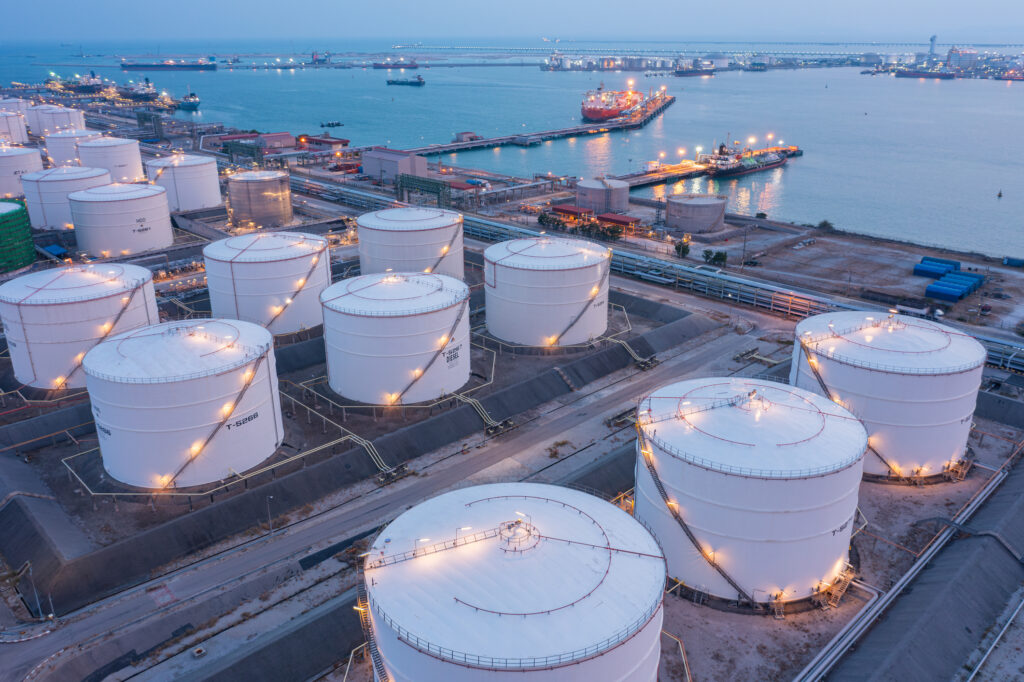
Aerial view of a crude oil refining plant representing a thriving business.

As Texas continues to lead the nation in industrial growth and energy production, ensuring the safety of our storage facilities is paramount. The Texas Commission on Environmental Quality (TCEQ) has taken a significant step forward with the introduction of the Aboveground Storage Vessel Safety (ASVS) program. This initiative, rooted in legislative actions like Senate Bill 900, is designed to enhance safety standards, prevent accidents, and protect the environment.

What is the TCEQ ASVS Program?

The ASVS program focuses on Aboveground Storage Vessels (ASVs) located at petrochemical plants, petroleum refineries, and bulk storage terminals. These vessels, with a capacity of 21,000 gallons (500 barrels) or more, store regulated substances and are constructed with non-earthen materials. By enforcing stringent safety standards and regular inspections, the TCEQ aims to mitigate risks associated with the storage of hazardous materials.

Why is This Program Important?

Recent incidents, such as chemical fires and spills, have highlighted the need for robust safety measures in storage facilities. The ASVS program addresses these concerns by:

  • Reducing Risk: Implementing comprehensive safety standards reduces the likelihood of accidents and environmental contamination.
  • Ensuring Compliance: Facilities must adhere to federal regulations and national consensus standards, ensuring a consistent approach to safety.
  • Enhancing Public Safety: By preventing accidents, the program protects both the public and the environment.

Key Components of the Program

The TCEQ ASV program encompasses several critical elements designed to ensure compliance and safety:

1. Registration and Certification

  • Facilities must register their ASVs through the State of Texas Environmental Electronic Reporting System (STEERS).
  • Annual certification of compliance with safety standards is required.

2. Safety Standards

  • Compliance with federal regulations (40 CFR Part 68 and Part 112) and national consensus standards (API Standard 653, API Standard 2350, NFPA standards) is mandatory.

3. Regular Inspections

  • TCEQ conducts on-site inspections every 1-5 years to verify compliance.
  • Inspections cover the physical condition of ASVs, operational checks, and adherence to safety standards.

4. Recordkeeping

  • Facilities must maintain detailed records of inspections, maintenance, and compliance efforts.

Exemptions and Special Cases

While the program covers a broad range of storage vessels, certain exemptions apply, such as:

  • Tanks used exclusively for crude oil production (upstream facilities).
  • Tanks that are part of stormwater or wastewater collection systems.
  • Flow-through process tanks, including pressure vessels, process vessels, and oil-water separators.
  • Liquefied Petroleum Gas (LPG) vessels.
  • Heated tanks used for specific industrial processes.

These exemptions ensure that the program is focused on vessels that pose the greatest risk.

Implementation of the ASVS program

These changes, including mandatory registration, compliance with safety standards, regular inspections, certification, and recordkeeping have a finite timeline to be implemented.

  • Existing ASV’s (tanks in service on or before September 1st, 2027) must comply with all specified standards by September 1st, 2027 or the next scheduled maintenance period (no later than September 1st, 2037).
  • New or replacement ASVs placed into service after September 1st, 2027 must comply within 30 days of beginning operations.

How Can R.E.M. Risk Consultants Help

Navigating the complexities of the TCEQ ASVS program can be challenging. Our team of experts is here to assist you every step of the way:

  • Compliance Consultation: We provide comprehensive consultations to help you understand and meet all program requirements.
  • Inspection Services: Our trained inspectors conduct thorough on-site inspections, ensuring your facility is compliant with all safety standards.
  • Training and Resources: We offer training programs and resources to keep your team informed and prepared.

Get Started Today

Safety and compliance are not just regulatory requirements, they are essential for protecting your business, your employees, and the environment. The TCEQ ASVS program is a vital initiative that supports these goals, and we are here to help you succeed.

Contact R.E.M Risk Consultants today to learn more about our services and how we can assist you in meeting the TCEQ ASVS program requirements. For more information about REM, visit our website, www.remrisk.com Together, we can ensure a safer future for Texas.

NFPA Combustible Dust Electrical Classification Requirements Flowchart

Combustible dust is utilized in a wide variety of facilities in different capacities, such as in food processing, plastics handling/production, wood, and metal manufacturing facilities. However, combustible dusts can ignite and result in flash fires and/or explosions if the quantity of dust suspended in air is above the minimum explosive concentration (MEC) and a competent ignition source is present. As a result, assessment and mitigation of hazards associated with combustible dusts is paramount in minimizing the likelihood of combustible dust incidents within the facilities, which can result in injuries and fatalities and costly property damage. Completion of Dust Hazard Analyses (DHAs), required by NFPA 660 Standard for Combustible Dusts and Particulate Solids and the Occupational Safety and Health Combustible Dust National Emphasis Program, serves to identify potential hazards associated with combustible dusts and recommend strategies to prevent ignition and subsequent dust explosions.

As part of a DHA, hazardous area classification requirements are used to determine the classification of the electrical equipment necessary for the areas in which combustible dusts may be present. NFPA 499 Recommended Practice for the Classification of Combustible Dusts and of Hazardous (Classified) Locations for Electrical Installations in Chemical Process Areas outlines a systematic approach for classifying hazardous locations based on the requirements set forth in NFPA 70 National Electrical Code. These locations are categorized based on the concentrations of combustible dusts which may be present and the likelihood of dust presence within the area.

Class II locations are areas where combustible dusts are or may be present in quantities sufficient to produce explosive or ignitable mixtures in air or in the presence of an oxidizer.[1] Class II locations are further divided into two divisions. Division 1 locations are those where hazardous concentrations of combustible dusts exist under normal operating conditions, or where such concentrations may exist frequently due to maintenance or equipment failure.[2] Division 2 locations are those where hazardous concentrations of combustible dusts are not normally present but may occur under abnormal conditions, such as accidental rupture of equipment.[3]

Dusts are further grouped based on their properties (E, F, and G), which influence the classification requirements of electrical equipment in proximity to the dusts.[4] Table 1 provides an outline of the definitions for the groups of dust.

Table 1: Dust Types by Group
Dust GroupDust Type
Group EMetal Dusts (Conductive and Explosive)
Group FCarbonaceous Dusts (Carbon Black, Coal, or Coke Dusts)
Group GDusts Not Included in Groups E or F (Grain Dusts, Flour, and Other Combustible Dusts)

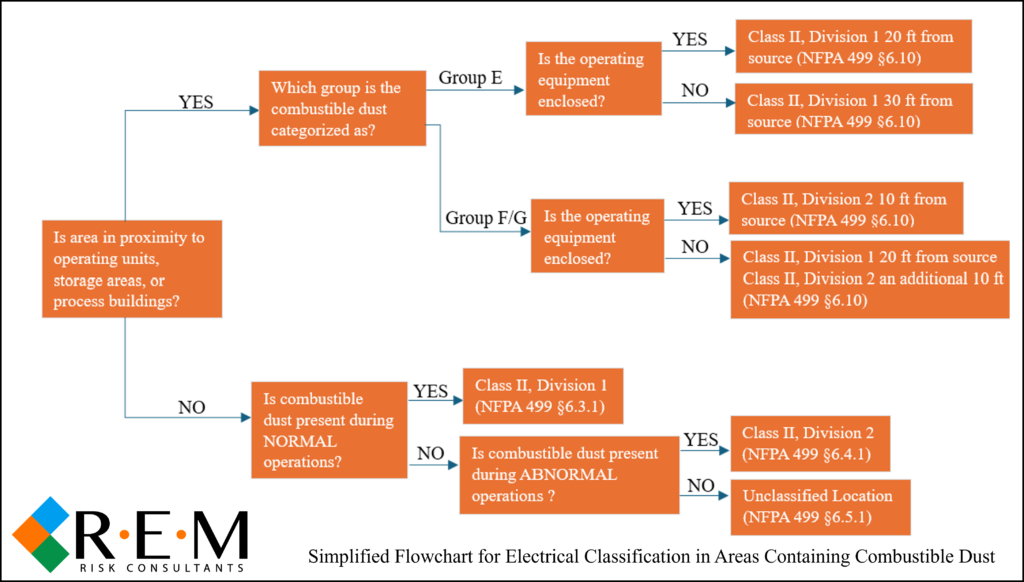
For areas surrounding operating units, storage areas, and process buildings, NFPA 499 contains classification diagrams based on the dust group (Group E, F, or G) of the combustible dust. In addition to the dust group, factors that influence the extent of the classified location include the specific particle density of the dust, whether the process equipment is open or enclosed, and whether the area in which the dust is located is walled off from other areas. To facilitate consistent assessments of combustible dust hazards within the facilities, REM Risk Consultants has developed a flowchart to determine the extent of classification necessary based on the properties of the combustible dust, equipment (e.g., whether the equipment is fully enclosed), and facility (e.g., whether the area is enclosed). A simplified example of this flowchart is shown in Figure 1.

Figure 1. REM’s Simplified Flowchart for Electrical Classification in Areas Containing Combustible Dust

The flowchart serves as a useful tool when developing a DHA, as it ensures that consistent electrical classification guidelines are provided within each DHA produced for areas of facilities in which combustible dusts may be present. Electrical classification guideline consistency ensures that the DHAs are effective tools for both the identification of potential dust hazards as well as the recommendation of strategies to prevent combustible dust ignitions and explosions within facilities.


[1] 2023 NFPA 70 §500.5(C) Classifications of Locations.

[2] 2024 NFPA 499 §6.3.1 Class II, Division 1 Classified Locations.

[3] 2024 NFPA 499 §6.4.1 Class II, Division 2 Classified Locations.

[4] 2024 NFPA 499 §3.3.9 Material Groups.

REM Risk Consultants assists clients with all aspects of Business Continuity and Resiliency – from process safety and fire protection solutions to occupational health and organizational risk management. Please contact REM to discuss your combustible dust needs and the full flowchart we use when performing DHAs.

NFPA660 Blog

Did you know that one spark can turn an entire facility into a dangerous fire hazard? Combustible dust is a silent risk that many industries face and a new, consolidated combustible dust standard has been released to help prevent catastrophic events. In previous years, the National Fire Protection Association (NFPA) published separate standards addressing the hazards of combustible dust across various industries, including food processing, wood processing, and manufacturing facilities. These standards have typically provided the requirements and safeguards presented in dust hazard analyses (DHAs).

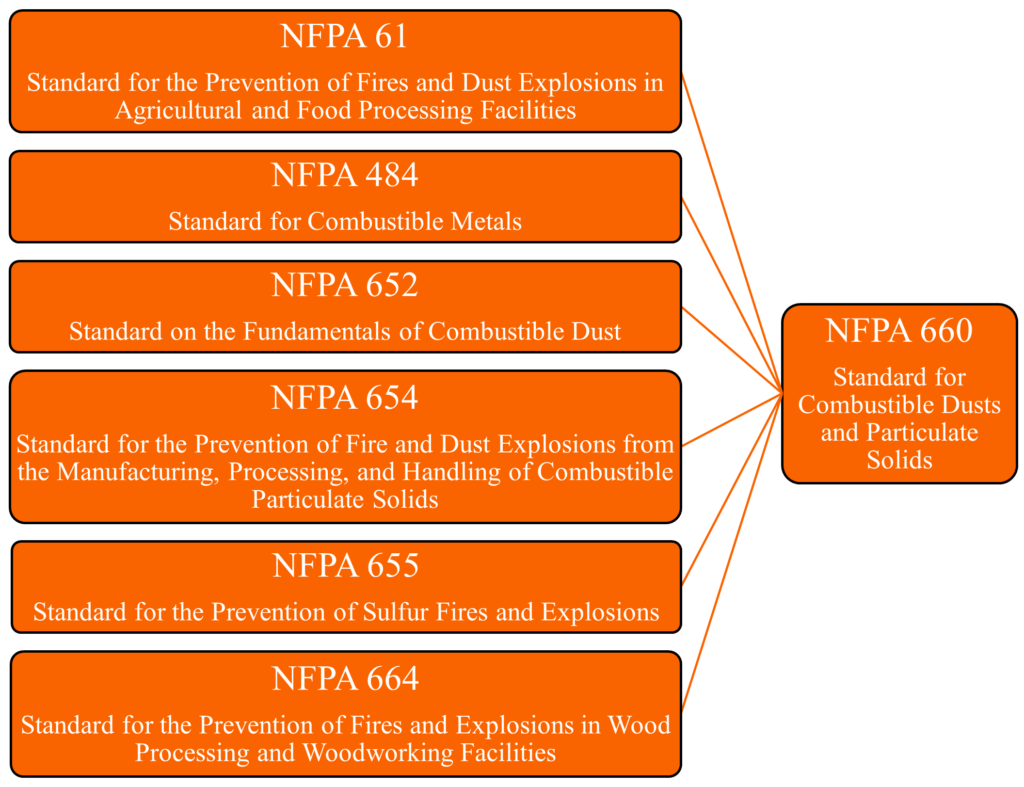
However, many of these prior standards provide redundant information (i.e. NFPA 652 providing general combustible dust requirements with other standards providing requirements for specific dust types which often overlap with NFPA 652). As a result, the 2025 NFPA 660 Standard for Combustible Dusts and Particulate Solids has been released as a consolidated standard for the prevention of fires and explosions related to combustible dusts.

NFPA 660 incorporates and builds on the fundamental principles found in NFPA 652 while harmonizing the specific requirements of industry-specific standards (NFPA 61, 484, 654, 655, and 664). By organizing the content into a single standard, NFPA 660 allows facilities to better understand their combustible dust hazards, streamline compliance efforts, and ensure consistency across operations and industries.

NFPA 660 provides a number of overall requirements for facilities. The requirements include:

  • Identification and classification of combustible dust hazards,
  • Performing a dust hazard analysis when combustible dusts are present,
  • Implementation of explosion and fire protection measures,
  • Employee training, and housekeeping and maintenance.

Facilities must identify combustible dust hazards, including which dusts are present that are combustible and the conditions under which they become hazardous (e.g., particle size and ignition sources). If a dust is determined to be combustible, a DHA is required to be performed for any new and existing facilities. The DHA must be performed by a qualified person with documented experience and education regarding DHAs, as well as assessment and identification of mitigation or elimination options for fire, flash fire, explosion, and related hazards of the specific type(s) of combustible dusts involved in the facility. The DHA must be renewed and updated every five years.

Facilities must implement engineering and administrative controls to reduce the risk of ignitions, explosions, and fires involving combustible dusts. The specific controls will depend on the nature of the combustible dust and facility processes. Examples of the controls include dust collection systems (e.g., baghouses and cyclones) as well as explosion venting and suppression systems.

In addition to engineering and administrative controls, NFPA 660 requires thatemployees are trained to recognize dust hazards and follow safe operating procedures. The training programs must cover the hazards of combustible dust, emergency response protocols, and safe handling practices. Housekeeping and maintenance requirements include the establishment of regular cleaning schedules, the use safe dust removal methods (e.g., vacuum systems), and ensuring proper maintenance of equipment to prevent ignition sources and minimize the accumulation of combustible dusts.

While much of the content of NFPA 660 is retained from the previous standards it is based upon, a number of additions and changes have been made. Additions include requirements for self-heating, thermal instability, water reactivity, and chemical reactivity assessments for dust under specific conditions, in addition to the previously required combustibility and explosibility tests. Moreover, requirements for an operational readiness review prior to facility start-up have been added.

Changes include:

  1. Clarified levels of protection provided by flame-resistant garments being as part of the personal protective equipment (PPE) requirements.
  2. Additional information detailing who is qualified to perform a DHA has been provided,
  3. Clarification of the requirements for bonding and grounding of housekeeping equipment.
  4. Resistance limits for flexible connectors have been updated.
  5. Requirements for additive manufacturing.
  6. Modified standards for portable vacuum cleaners used with combustible metals.

The introduction of NFPA 660 marks a significant step forward in streamlining the assessment of combustible dust hazards. By consolidating multiple NFPA standards into one unified document, NFPA 660 provides a consistent framework for industries to manage combustible dust risks effectively. In addition to the consolidation of information, NFPA 660 provides a number of additions and changes from past standards to clarify and update facility requirements involving combustible dusts. By understanding and implementing the requirements of NFPA 660, facilities can protect their operations from the potentially devastating consequences of combustible dust fires and explosions that could harm personnel and equipment.

The new NFPA 660 standard is an essential resource for protecting your facility from combustible dust hazards, but navigating its requirements can be complex.

At REM Risk Consultants, we specialize in guiding facilities like yours through the intricacies of fire protection and process safety requirements. Our team is ready to help you navigate these requirements and implement effective safety solutions that will keep your operations running smoothly. Don’t wait until it’s too late, contact us today to learn how we can help safeguard your operations and ensure compliance with NFPA 660.

NFPA 30 Flammable Liquids

In most jurisdictions, facilities that store or use flammable or combustible liquids are required to adhere to the requirements outlined by NFPA 30 Flammable and Combustible Liquids Code. Chapter 6 of the standard addresses fire and explosion prevention and risk control requirements associated with the storage, processing, handling, and use of ignitable (flammable or combustible liquids) (2024 NFPA 30 section 6.1). One of the requirements within Chapter 6 is that ignitable liquid operations must be reviewed to ensure fire and explosion hazards are adequately addressed by fire prevention, fire control, and emergency action plans.

Before the 2024 edition of NFPA 30, hazard analysis was required to determine the extent of fire prevention and control that should be implemented by consultation with the authority having jurisdiction (AHJ) or an engineering evaluation based on fire protection and process engineering principles (2021 NFPA 30 section 6.4.1.2.1). The standard further expressed what an engineering evaluation is required to include, but not be limited to (2021 NFPA 30 section 6.4.1.2.2):

  1. Analysis of the fire and explosion hazards of the operation.
  2. Analysis of emergency relief from process vessels, taking into consideration the properties of the materials used and the fire protection and control measures taken.
  3. Analysis of applicable facility design requirements in Chapters 17, 18, 19, 28, and 29.
  4. Analysis of applicable requirements for liquid handling, transfer, and use as covered in Chapters 17, 18, 19, 28, and 29.
  5. Analysis of local conditions, such as exposure to and from adjacent properties and exposure to floods, earthquakes, and windstorms.
  6. Analysis of the emergency response capabilities of the local emergency services.

In the 2024 edition of NFPA 30, the standard now outlines the scenarios in which explosion hazards are required to be evaluated in addition to the engineering evaluation outlined above. The conditions requiring explosion hazard evaluations are outlined below:

  1. Class IA liquids [FP < 73⁰F (22.8⁰C) and BP < 100⁰F (37.8⁰C)] are stored in containers larger than 1 gal (4 L) or quantities exceeding the MAQ
  1. Class I liquids [FP <100⁰F (37.8⁰C)] are handled, transferred, or used in quantities exceeding the MAQ
  2. Class II or Class III liquids [FP ≥100⁰F (37.8⁰C)] are handled, transferred, or used at quantities exceeding the MAQ at temperatures at or above their flash point or above atmospheric pressure
  3. Class II or Class III liquids [FP ≥100⁰F (37.8⁰C)] are handled, transferred, or used for operations at temperatures at or above their boiling point in any quantity
  4. Runaway reactions or creation of ignitable vapors can occur because of normal mixing operations
  5. Ignitable liquids can come in contact with incompatible material under abnormal conditions

These new parameters lead to many facilities requiring explosion hazard evaluations that may not have previously. A relatively small volume of Class IA liquids, in a container exceeding 1 gallon in size, may be present in many facilities that are unaware of this new requirement they must adhere to. As new jurisdictions adopt the 2024 edition of NFPA 30, explosion hazards will need to be assessed and documented. Especially in the event a fire inspector or marshal may visit their facility, otherwise, they may scramble to evaluate after a visit or worse, after an incident occurs. NFPA 30 is also a Recognized and Generally Accepted Good Engineering Practice, therefore facilities covered by the Process Safety Management (PSM) requirements will need to adhere to this standard as well.

If you are uncertain about your liquid classification our calculator can assist you in determining that.

If you require an engineering evaluation or explosion hazard evaluation in accordance with NFPA 30 R.E.M. Risk Consultants would be happy to assist you. The potential for an explosion does exist when any of the above parameters are met. The safety of personnel should be of the utmost importance when these parameters exist, especially in locations where flammable liquids are handled or used. Fire and explosion hazards can be evaluated, analyzed, controlled, and/or mitigated in many ways, and R.E.M. has the experience to help you select the right hazard approach for you, your business continuity, and the safety of your personnel.

belinda fewings 6wAGwpsXHE0 unsplash

Welcome to the R.E.M. Blog! This is an space for us to provide commentary on current issues facing our industry and clients. We hope to provide useful insight on topics and challenges we frequently address.

We’re thrilled to have you here and eager to share our knowledge and expertise. Please explore our curated collection of content, check back frequently for new posts, and reach out with any questions.

REM Risk Consultants assists clients with all aspects of Business Continuity and Resiliency – from process safety and fire protection solutions to occupational health and organizational risk management. Please contact us if we can assist you in improving your operations.

Office Locations

Dallas · Cincinnati · Houston

Office Locations

Dallas, TX

Houston, TX

Cincinnati, OH

Careers 

We are always looking for qualified candidates!

Join Our Team

Copyright © REM Risk Consultants, LLC 2024. All rights reserved. 🐿

Copyright © REM Risk Consultants, LLC 2024. All rights reserved. 🐿